2025 Summit on AI, Faith, and Human Flourishing
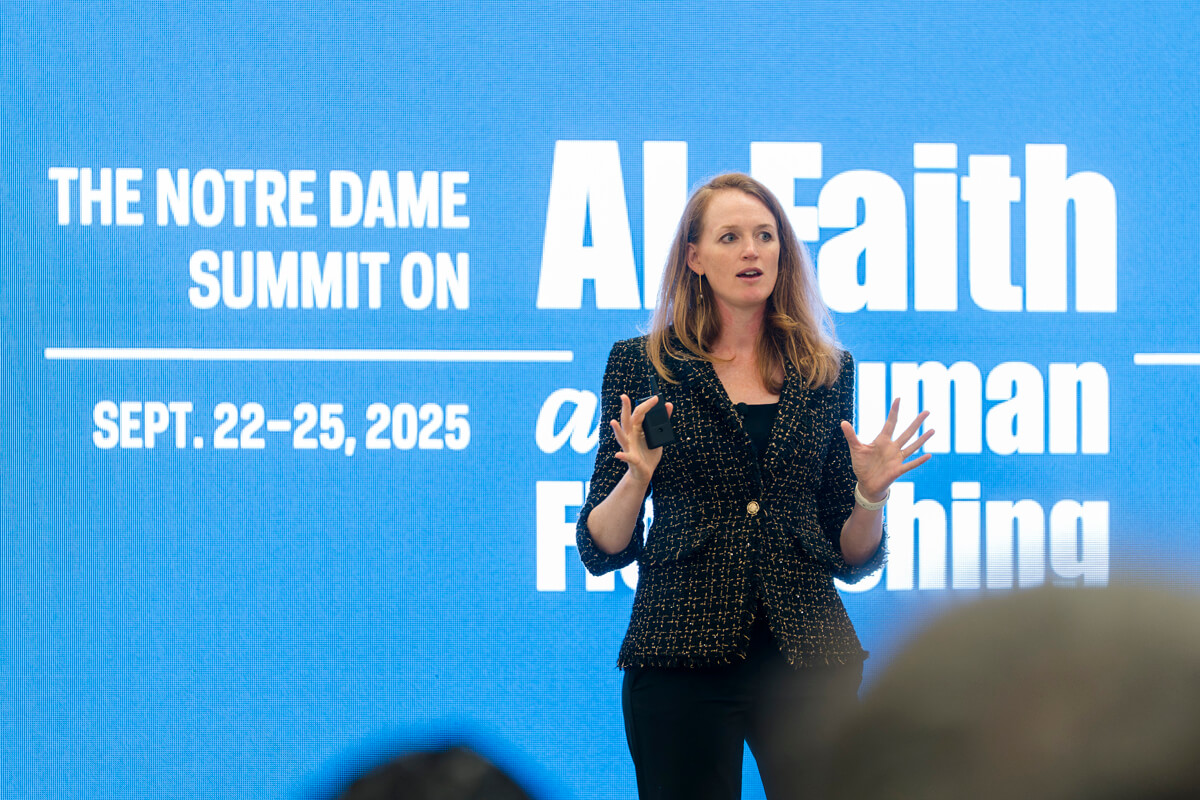
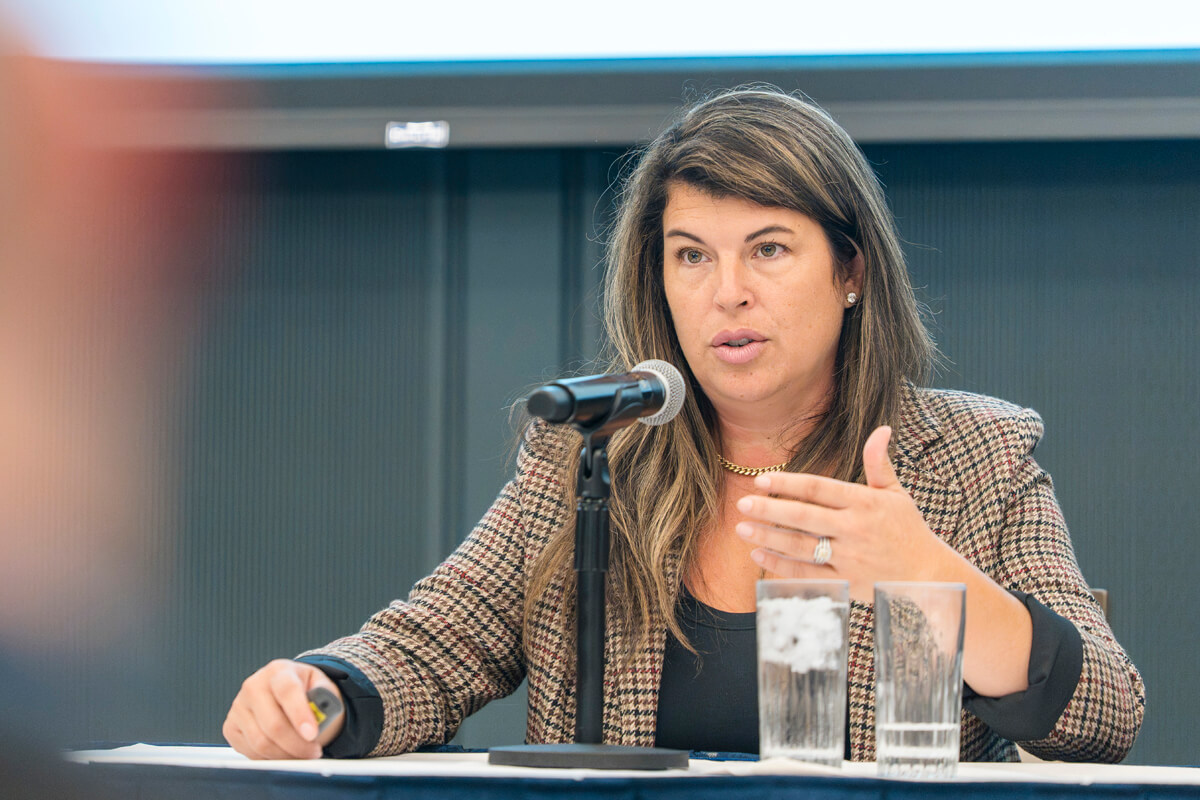
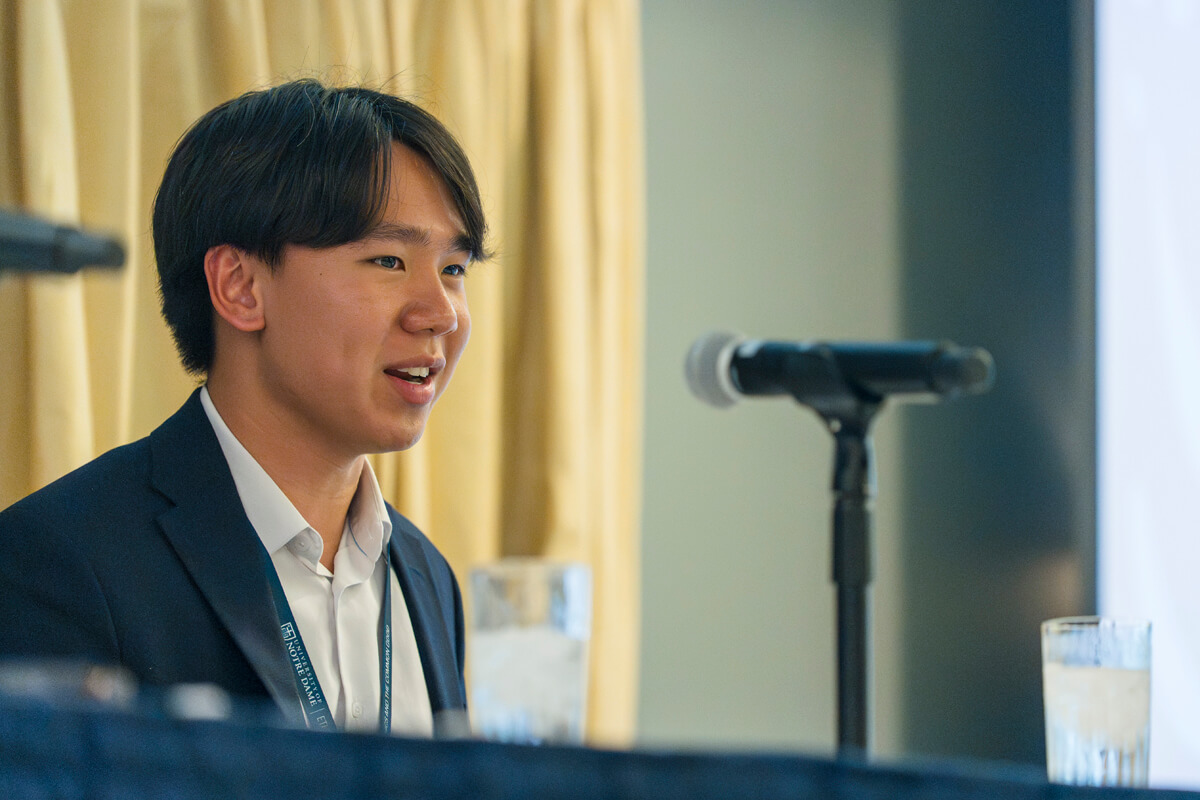
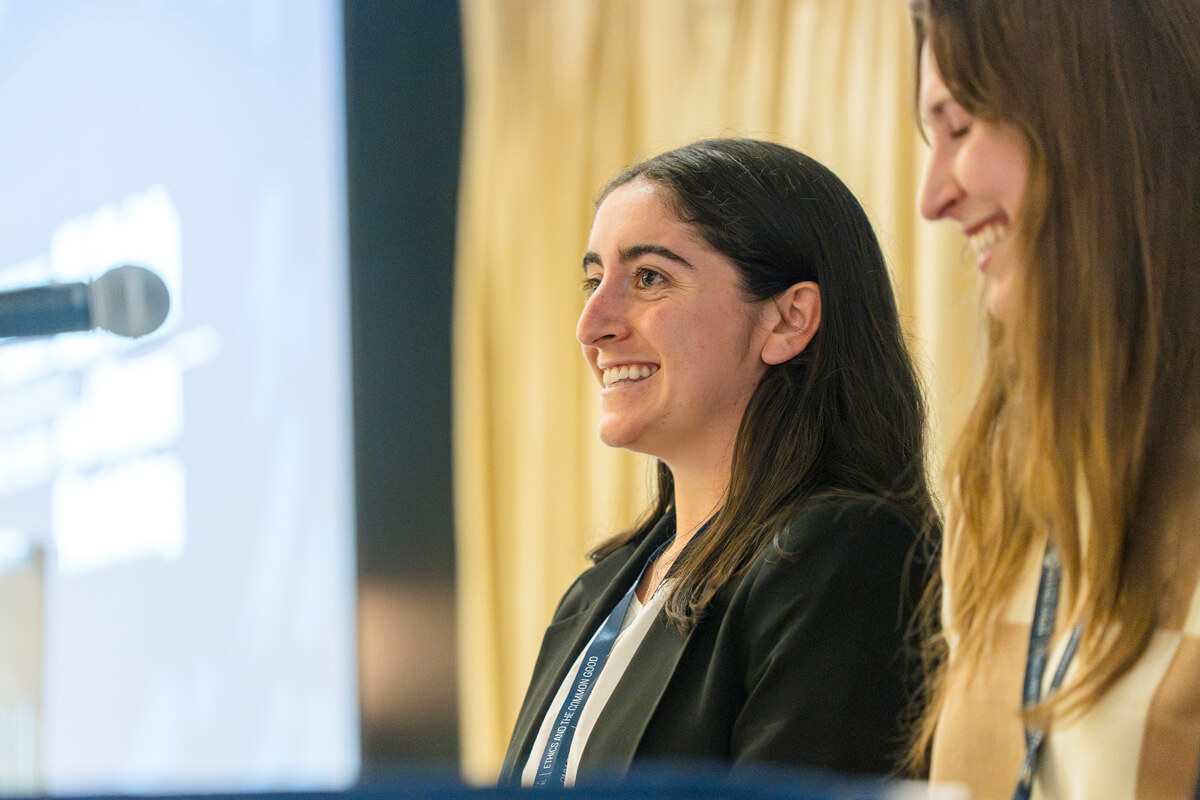
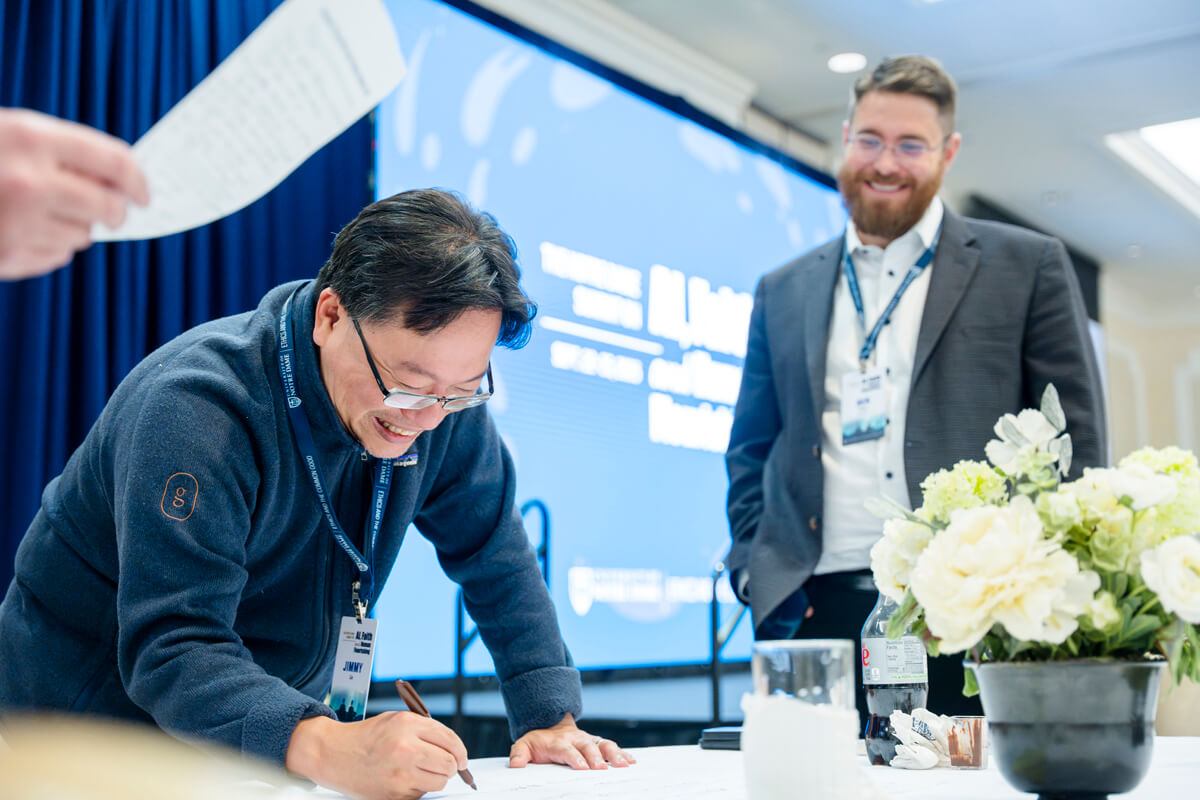
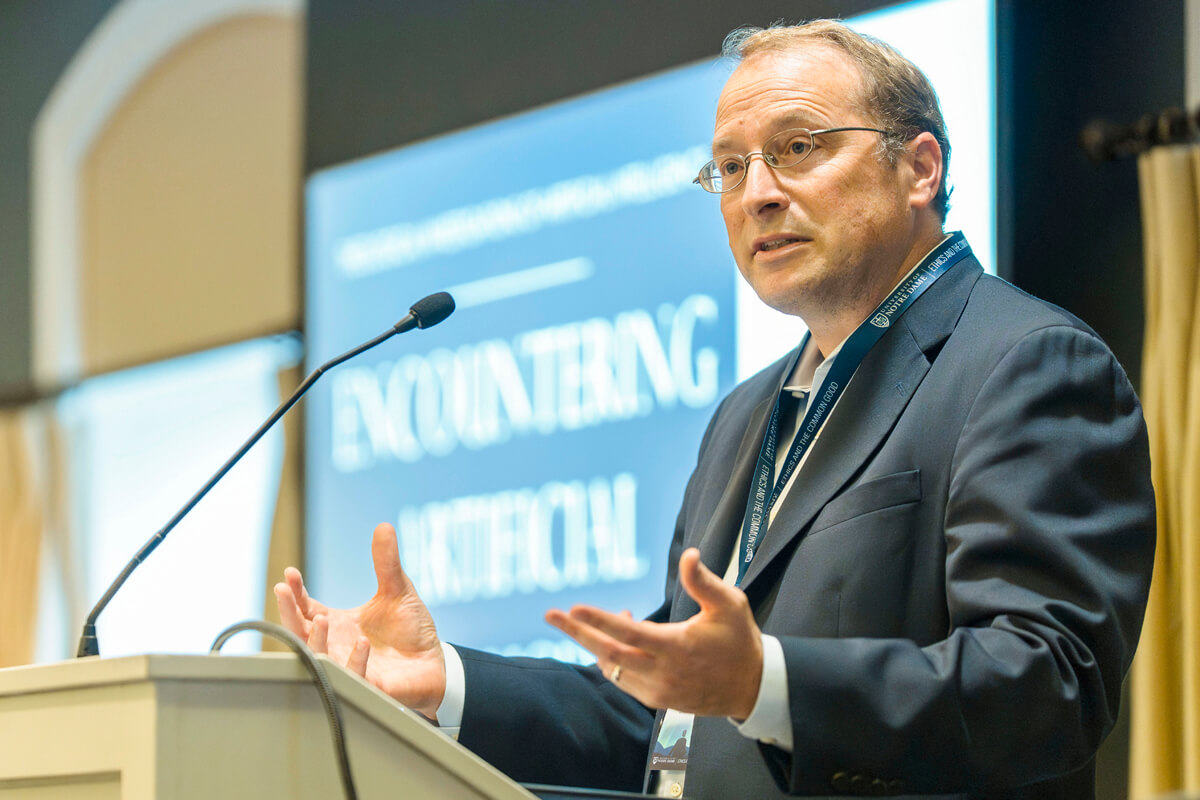
Two hundred invited leaders from the tech industry, faith communities, academia, media, and government gathered on campus last week for the Notre Dame Summit for AI, Faith, and Human Flourishing. A response to the recent explosive growth in artificial intelligence, the summit was created to begin to develop a collective response to the opportunities and challenges presented by these new technologies, ensuring that Christians have a “voice at the table” during this time of rapid social transformation.
“As we move to an economy and to a society where this kind of technology is ubiquitous in our day-to-day lives, it raises profound questions about what it means to lead a good human life and what it means to serve the common good,” said Meghan Sullivan, Wilsey Family College Professor of Philosophy and director of the Institute for Ethics and the Common Good and the Notre Dame Ethics Initiative. “Christians have fantastic insight on this and need to play a vital role in the bigger, pluralistic debate about the world that we're going to build with this technology.”

The three-day event began with an opening Mass celebrated by Cardinal Christophe Pierre, Apostolic Nuncio to the United States of America. Cardinal Pierre began his homily by stating that artificial intelligence presents one of the great ethical and social challenges of our time, naming specific concerns about the dignity of work, human equality, and the care of our common home. The Church, Cardinal Pierre said, is “called to provide a moral compass, ensuring that technology does not enslave but serves the common good.”
Notre Dame President Rev. Robert A. Dowd, C.S.C., was a concelebrant of the Mass and welcomed summit attendees to the opening dinner, emphasizing the importance of unity.
“I am convinced that this moment in history requires an alliance of moral leaders from higher education, industry, faith communities, and from all segments of society to renew our commitment to authentic human flourishing, always mindful that what it means to be human is to be made in the image and likeness of our loving God,” said Fr. Dowd. “No artificial intelligence, no matter how sophisticated, can alter this truth.”
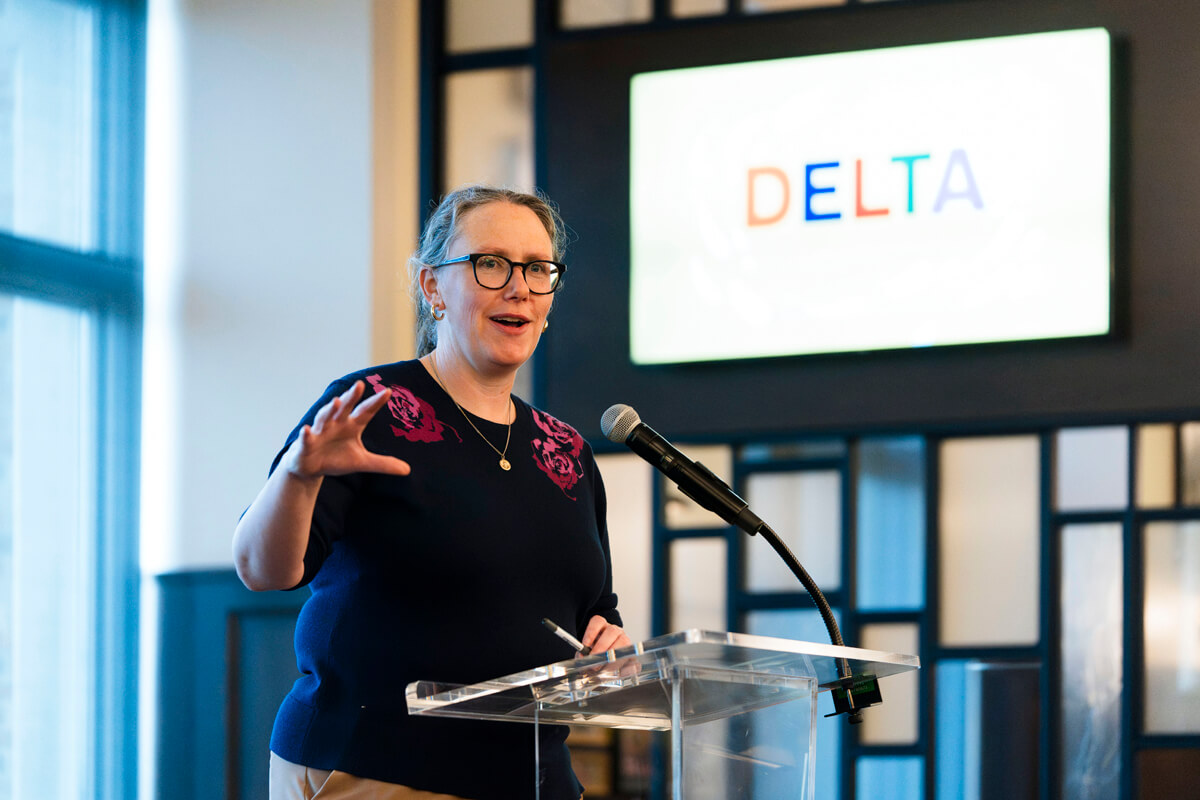
In her event keynote delivered on Tuesday morning, Sullivan paralleled the moral significance of AI to the development of the atomic bomb in the early 1940s, and called for “a growth in conscience and in ethics proportional to the astounding growth in digital technology that we are currently witnessing.”
The majority of conversations about AI ethics focus on the basics of safety, transparency, and privacy, Sullivan said. While acknowledging that this “ethical floor” is important, she argued that virtue ethics—one of the Catholic Church’s most enduring contributions to philosophy—provides a more meaningful and illuminating way of thinking about AI, broadly considering its potential to encourage or hinder human flourishing.

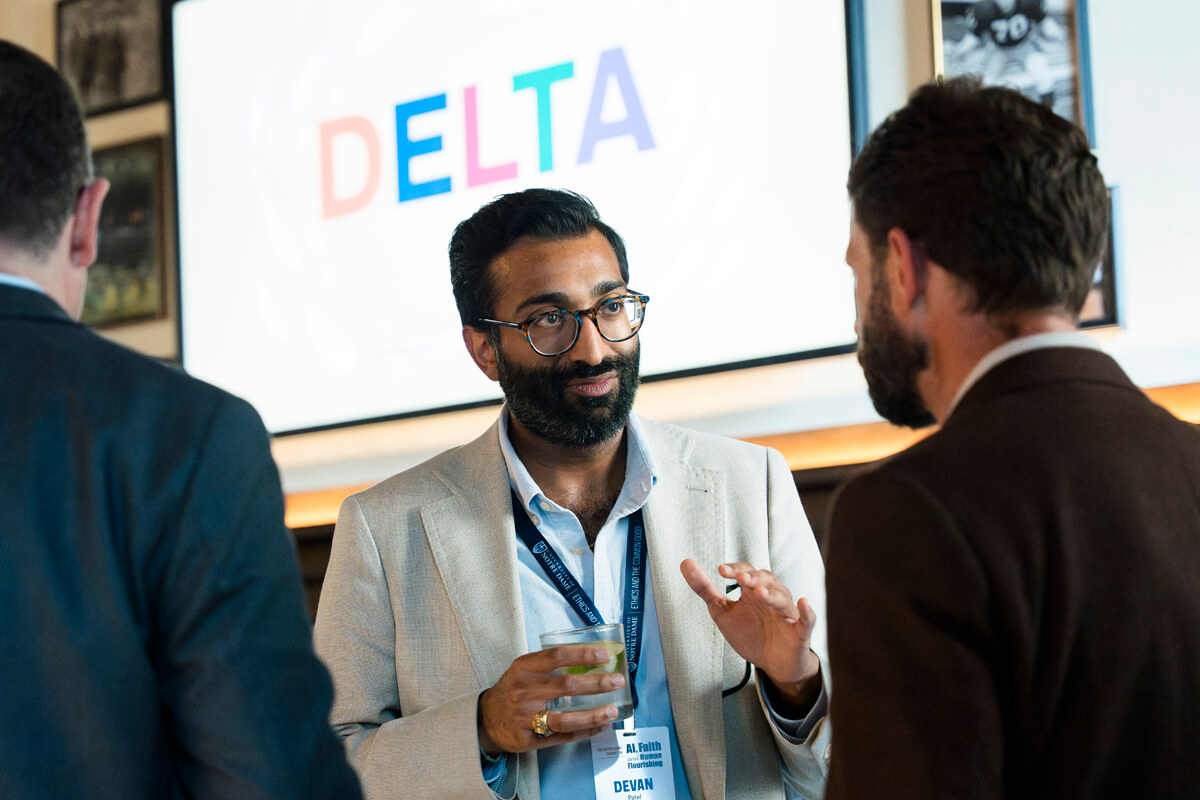
In this context, Sullivan introduced DELTA, a faith-informed approach to conversations about AI that is rooted in the Christian values of dignity, embodiment, love, transcendence, and agency. A practical resource for sectors experiencing disruption from AI, including workplaces, schools, churches, and homes, DELTA was developed out of hundreds of focus groups and conversations that Sullivan and her team have led over the past year with the support of a major grant from Lilly Endowment Inc.
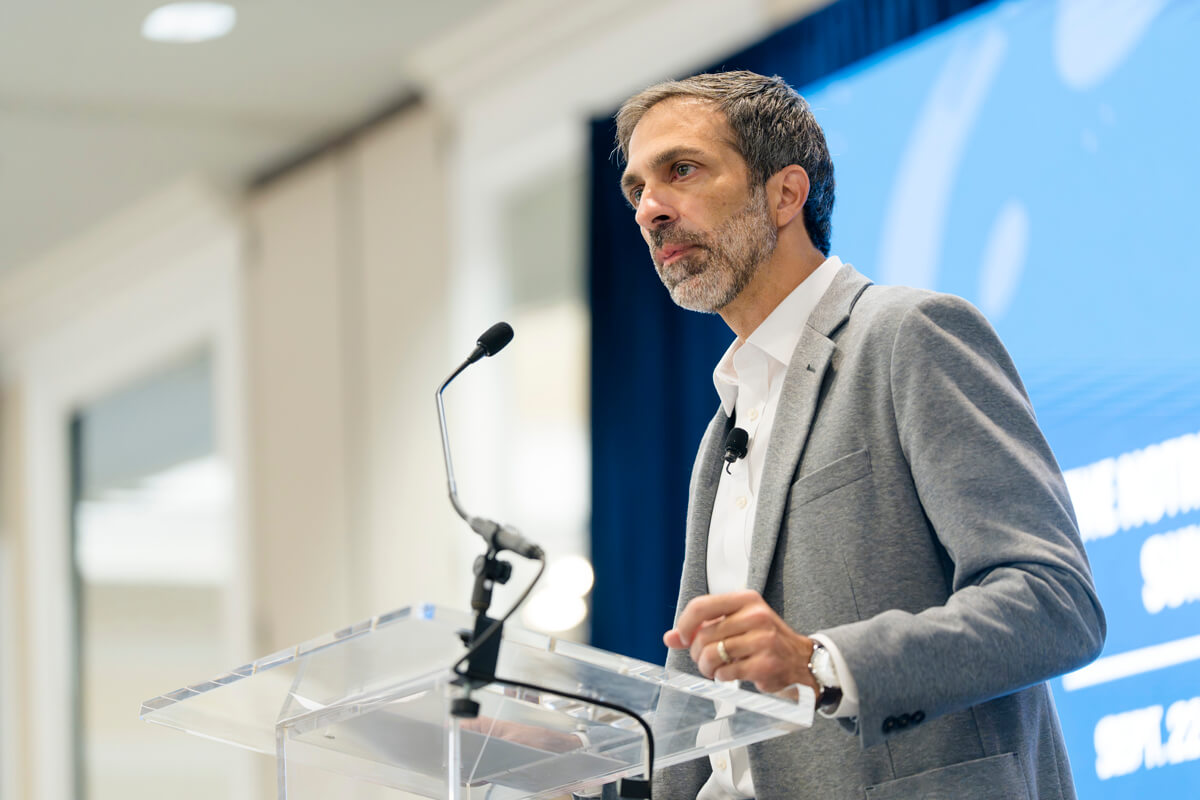
Additional summit speakers added their own perspectives: Alex Hartemink, professor of computer science at Duke University, presented a primer on core AI concepts such as algorithms, models, machine learning, and deep learning, while also outlining the history of AI. Industry leaders Cristos Goodrow (YouTube), Larry Augustin (Augustin Ventures), and Bill Colleran (Semiconductor Acquisition Partners) provided insights and lessons learned from within the tech world.

Others covered specific aspects of AI through the lens of DELTA: Molly Kinder, senior fellow with the Brookings Institution, focused on the importance of the dignity of work, which has the potential to change dramatically as AI begins to automate tasks and decisions, while Andy Crouch, partner for theology and culture with Praxis, spoke about the threat that AI poses to the development of authentic, complex human relationships and love. Mike Sacasas, executive director of the Christian Study Center of Gainesville, encouraged participants to consider whether AI makes people more or less able to perceive and respond to God's presence in the world. Other lead speakers included Andrew Schuman (The Veritas Forum), David Cunningham and Lynne Spoelhof (NetVUE), Anne Snyder (Comment Magazine), and Elizabeth Dias (New York Times).
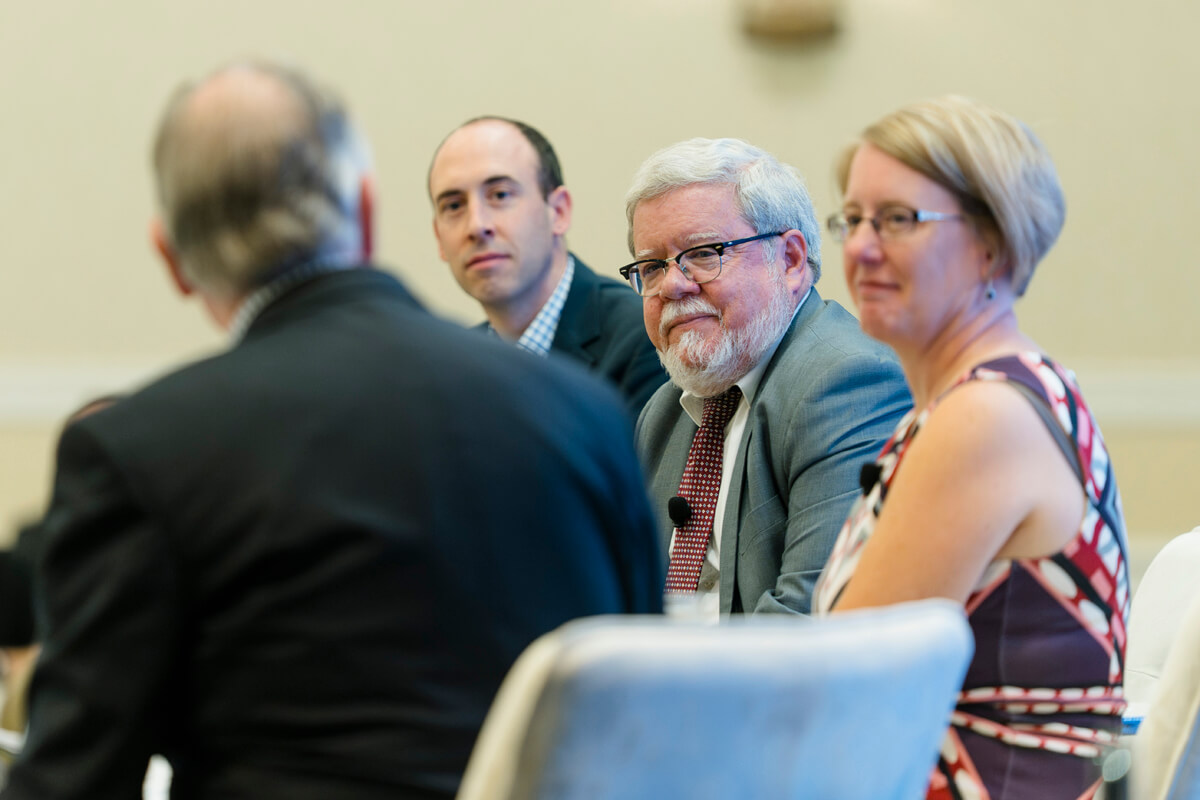
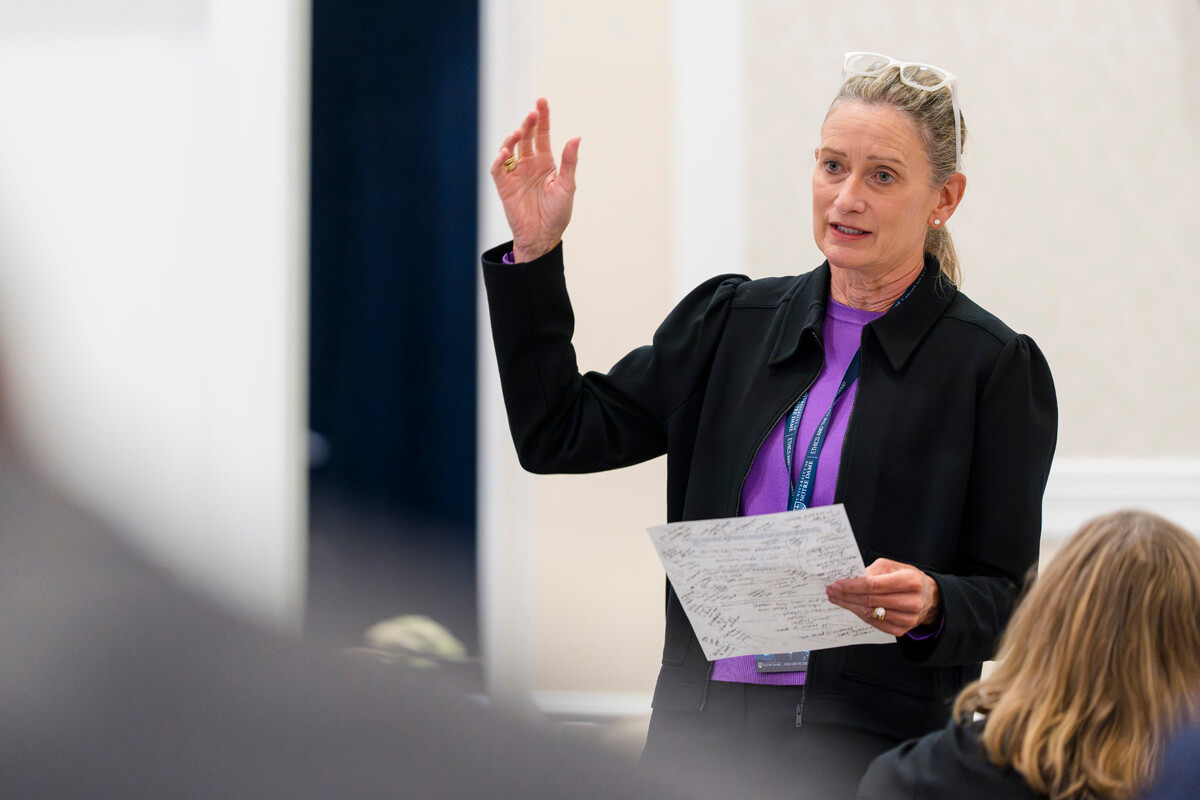
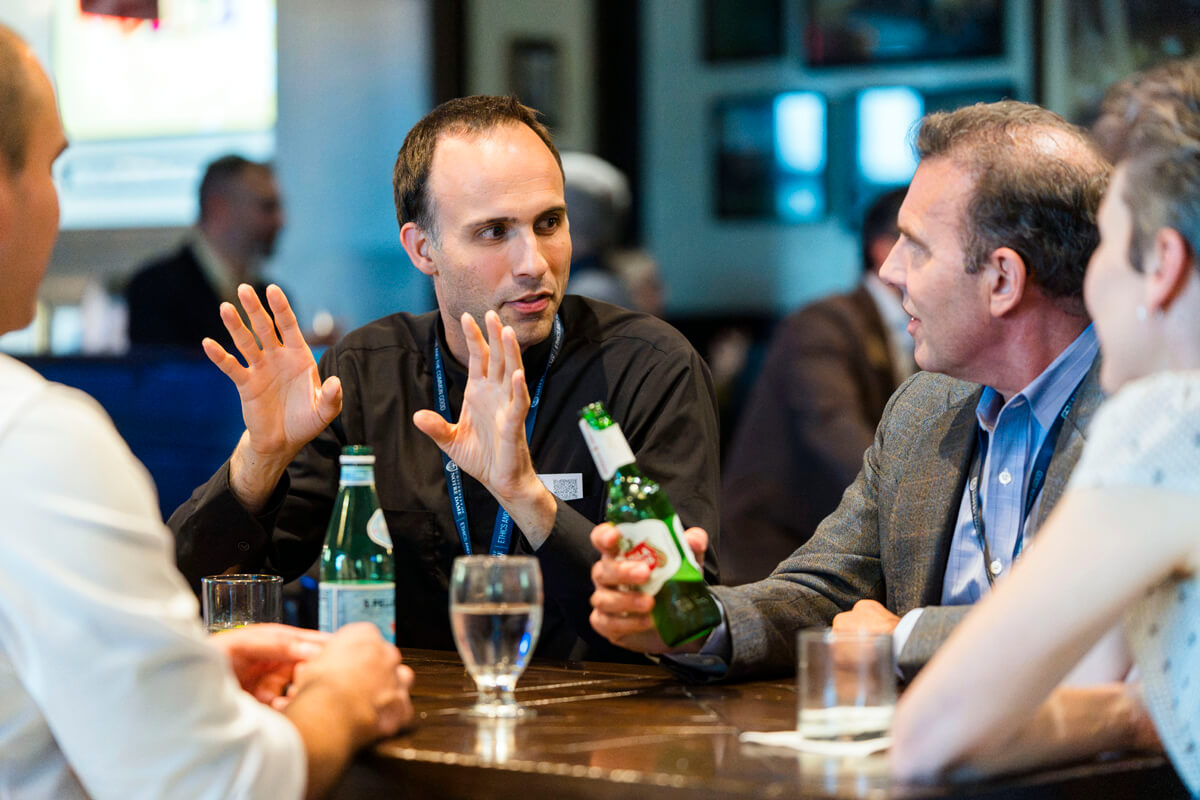
Throughout the summit, breakout sessions and working groups provided opportunities for participants to engage more deeply with the DELTA framework and with each other.
The Summit for AI, Faith, and Human Flourishing was the first major event in Notre Dame’s ongoing commitment to this work. Going forward, the Institute for Ethics and the Common Good will focus on building and sustaining an extended network of Christian thought leaders in this space, hosting additional DELTA-centered events across the country, and generating related publications, tools, and media.
“We still have the capacity to direct how this history-altering technology goes. But we've got to roll up our sleeves and do that work,” said Sullivan.
_____________
The Institute for Ethics and the Common Good is at the heart of the Ethics Initiative, a University-wide effort to establish Notre Dame as a premier global destination for the study of ethics. Under the leadership of Meghan Sullivan, Ethics Initiative director and Wilsey Family College Professor of Philosophy, the institute focuses on cross-disciplinary ethics research, undergraduate course development, the moral formation of its students and faculty, and engaging the public in meaningful dialogue around ethical issues.
As DELTA continues to grow and develop, stay up to date through ECG's news page, LinkedIn, and Facebook.